EOS7Energy Efficiency Calculation
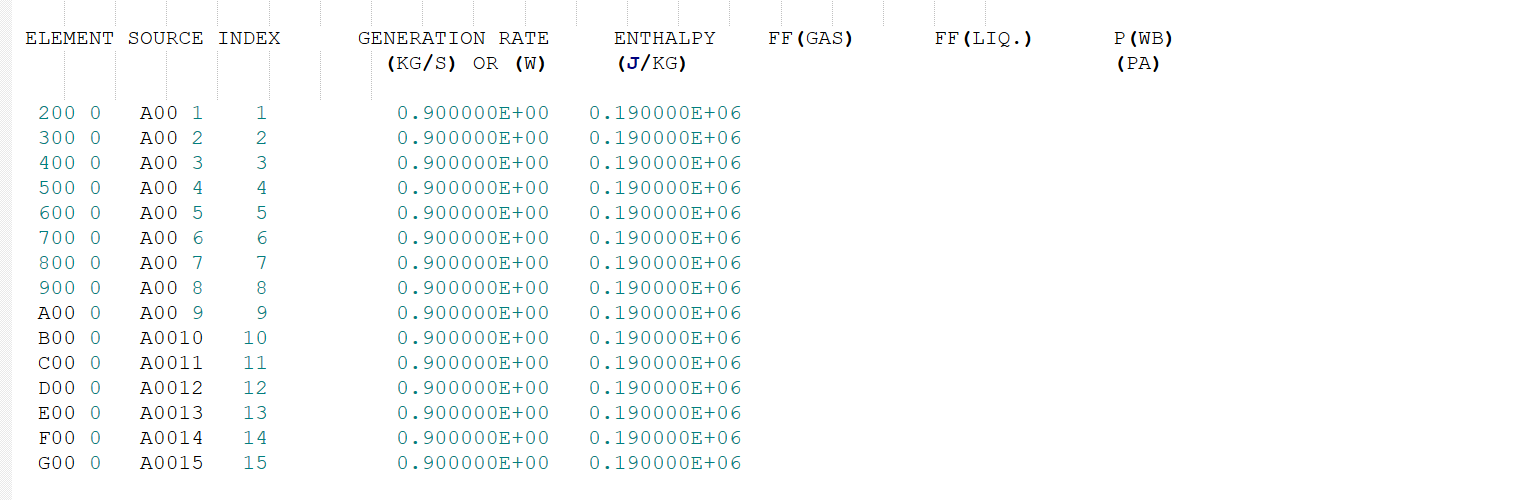
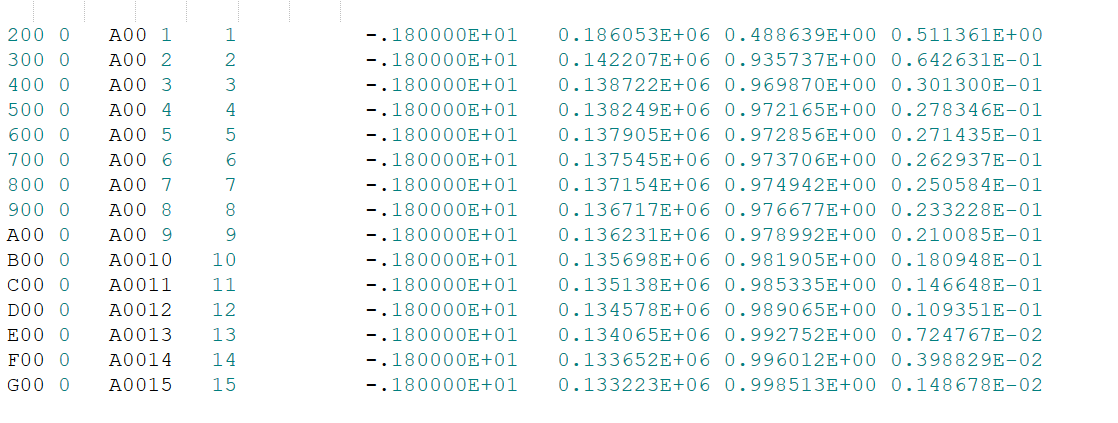
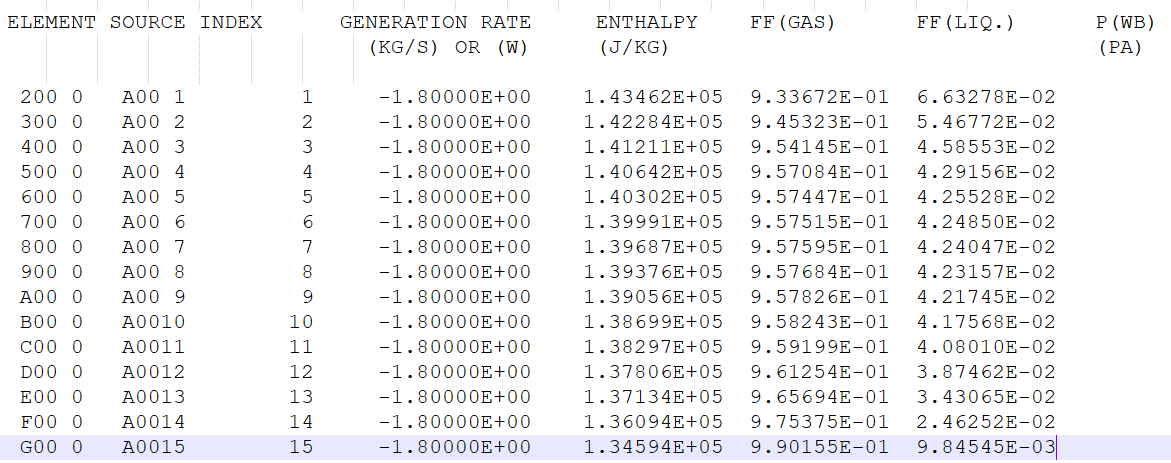
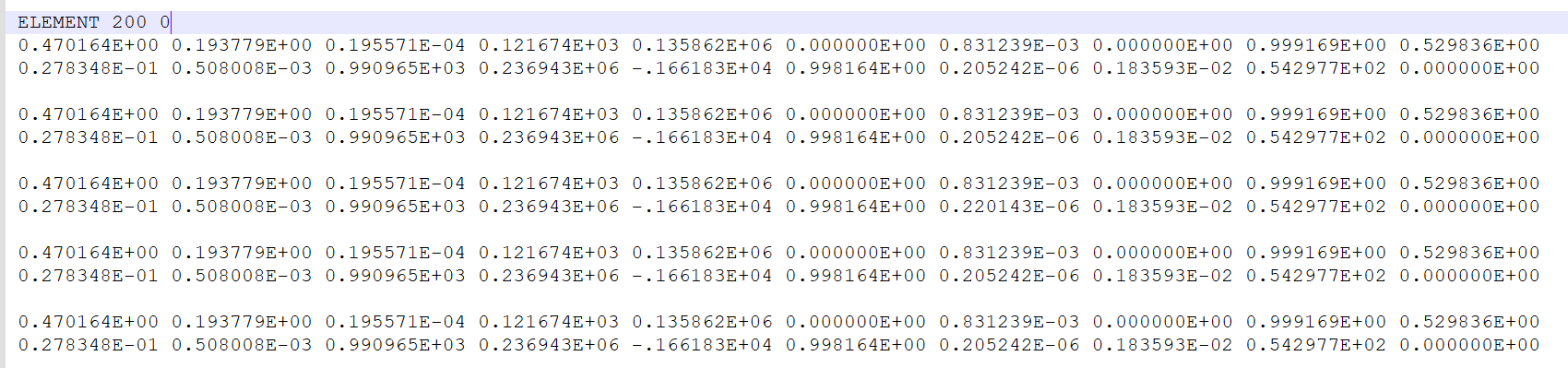
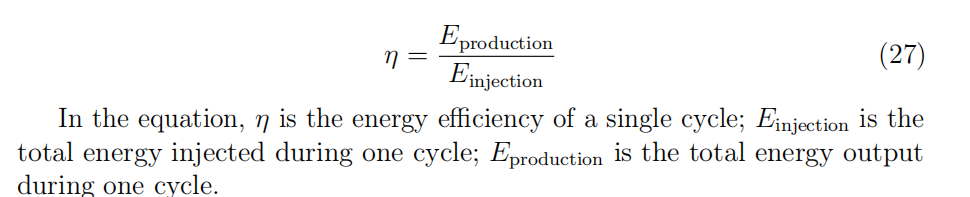
I want to perform cyclic injection and extraction to obtain energy efficiency. I have set the energy efficiency using the following calculation formula. However, when I set MOP(5) greater than 0, the enthalpy values of all units also appear, which are different from the ENTHALPY given in the output. Which enthalpy value should I use as the basis for calculating energy efficiency? Below are the attached result files for injection and extraction. I hope to receive assistance and greatly appreciate it.
image image image
5 replies
-
You have to use the enthalpy printed in the output file related to the sinks and sources contributing to the cyclic injection and extraction process ypu want to monitor.
The enthalpy printed using MOP(5) is that of the phases present in each element of the discretization grid (see pag. 13 of TOUGH2 user's guide), not the enthalpy of fluid produced or injected.
Regards,
Alfredo
-
Sorry, but I have no time to run your input file. I can just make some comments looking at the shared files.
- you sent separate output files for the daily air injection step and the two daily extraction steps. I would have expected a single input file to simulate many daily cycles with injection and extraction history given through a table under GENER.
- during extraction, the brine phase mass fraction amounts to 2-6 %, while I guess it would be better to have just the extraction of (wet) air with the brine phase at irreducible saturation around the wells. Looking at some published papers about CAES (Compressed Air Energy Storage), at the beginning air is injected to create an air bubble around the injection wells with water at irreducible saturation in such a way that subsequent cycling injection/extraction does not produce liquid brine (apart for possible condensation of water vapor).
- you mention CAES in your TOUGH2 files. In Compressed Air Energy Storage in aquifers (CAESA) the energy of compressed air is recovered by expanding the compressed air in a turbine. Thus, the evaluation of energy storage efficiency is a bit more complex than just an enthalpy balance. You may have a look at: Oldenburg and Pan (2013). Porous Media Compressed Air Energy Storage (PM-CAES): Theory and Simulation of the Coupled Wellbore-Reservoir System. TPM volume 97, p. 201–221.
- whitout an initial gas bubble, I guess the energy efficiency of CAES cannot be constant even with constant extraction/injection flow rates as it will be affected by evolving conditions in the reservoir volume affected by air injection with evolving spatial distibution of T and saturations.
- you should consider that in EOS7 the internal energy of gaseous air is evaluated assuming an ideal gas approach. So, JT effects upon compression and decompression of air are not simulated. Depending on P changes, these effects may not be completely negligible. Other thermophysical properties in EOS7 are computed with an approximated approach whose accuracy depend on P, T and salinity ranges.
Others, with specific experience on CAES modeling, may give you further and more useful advices.
Regards,
Alfredo